英文解読練習として英語のニュースから日本語に翻訳された記事をよく読んでいますか?このコーナーではそんな世界の面白いニュースとその日本語訳をピックアップしてご紹介します。リーディングや外国人に話しかける時にも、緊張をほぐして、会話のきっかけとしていかがですか?
英語:“The centuries-old Japanese art of ikebana draws those seeking calm”
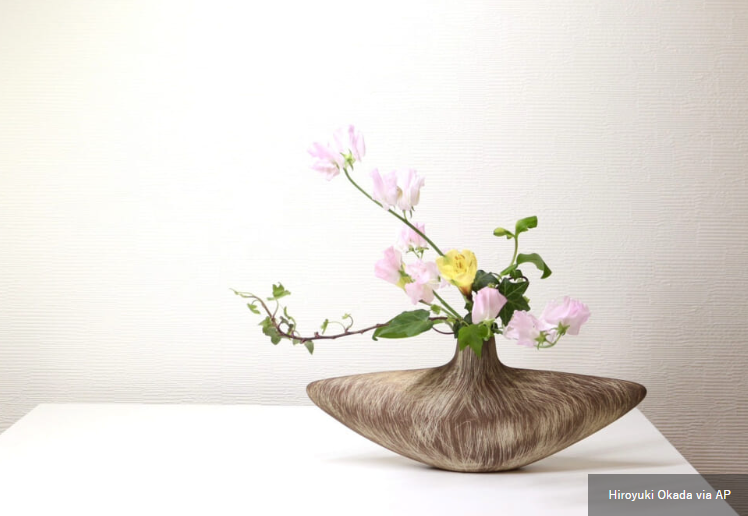
Ikebana, the Japanese art of arranging flowers, is a form of expression that dates back more than 500 years. It continues to blossom, quietly, not only with traditionalists but also with newcomers who find its blend of creativity and mindfulness to be restorative.
Ikebana can be a bit like solving a puzzle, except there’s no fixed answer. Because each flower, and human individual, is different, there are multiple solutions.
“There’s a ‘detox’ purifying factor, and a healing,” says Hiroyuki Okada, 40, who began taking lessons in ikebana about seven years ago. He now teaches Ikenobo, the oldest of three major ikebana schools.
Okada, who also teaches backflips to anyone who wants to learn, usually wears silver chains and jeans, but he wears a nice kimono when he formally demonstrates his arrangements. He considers himself typical of those drawn to ikebana today, people looking for joy, purpose, or solace from the daily grind or pain of modern life.
“In arranging (flowers), you are dealing with the life that is there, the beauty, of course, but you find what’s in your heart,” said Okada. “You come face to face with yourself.”
The Kyoto-based Ikenobo school, which is rooted in Buddhism, now has chapters around the world.
Okada’s previous job at a nonprofit involved talking to people from around the world, and he realized how different — and alike — people were. When he switched to his current job at a flower shop, he decided to take up a pursuit that was Japanese, so he could explore that aspect of himself, and one that could be done for a long time, alone.
Ikebana involves interacting with nature, although on a small scale — usually in a little vase.
“It is about the relationship of the creator with the flowers,” said Senko Ikenobo, headmaster-designate of the Ikenobo school. Her family dates back generations to the originators of the art.
Jeannette Haviland-Jones, professor of social psychology at Rutgers University, says studies have shown “that flowers and even flower scents promote happiness in people. We suggested a coevolutionary theory for this in which flowers became the ‘pets’ of the plant world.”
Besides a flower’s beauty and fragrance, the feel of its petals and leaves to the touch is crucial, like petting a kitten or a puppy, according to Okada.
There are toddlers who do Ikenobo, copying their moms, and there are devoted centenarians. The headmaster-designate says she has seen ikebana help women who are juggling work and motherhood, or taking care of aging parents.
Ikebana has a healing effect similar to that of yoga, meditation or play, says Mayu Shimizu, who works for an online educational service and has been taking lessons from Okada for about three years.
“I like this moment of nothingness when you are concentrating on the flowers before you,” she says. “My mind feels clearer. I feel more at peace, and gentle.”
日本語:“癒しを求める現代人にも人気の生け花”
花をアレンジする日本の芸術、生け花は、500年以上も前にさかのぼる表現の一形態だ。それは今もなお静かに花開いており、伝統主義者だけでなく、創造性とマインドフルネスの融合が癒しをもたらすことを発見した新しい世代にも広がり続けている。
生け花は、決まった答えがないことを除けば、パズルを解くのにも少し似ている。それぞれの花、それぞれの個人は異なるため、たくさんの解がある。
「浄化の要素『デトックス』と癒しがあります」と7年前に生け花のレッスンを受け始めた岡田博幸さん(40)は話す。彼は今、生け花の三大学派の中で最古の池坊を教えている。
習いたい人にはバク転も教えている岡田さんは、普段、シルバーのチェーンとジーンズを身に着けているが、生け花を正式に披露するときは素敵な着物を着る。自身を、今の時代に生け花にひきつけられる典型的な人物だという。喜びや目的、そして日々の退屈な仕事や現代生活の苦しみから逃れるための癒しを求める人たちだ。
「(花を)生けることで、そこにある命、そしてもちろん、美しさに触れますが、自分の心を見つけることでもあります」と岡田さんは語る。「自分自身と向き合うのです」。
仏教を源流とする京都の池坊は今、世界中に支部がある。
岡田さんの以前の仕事だった非営利団体では、世界中の人と話すことを含んでいた。彼は人々が異なっているようでも似ていることに気付いた。現在の花屋の仕事に転職したとき、彼は日本ならではの探求を始めると決めた。自分自身の日本の側面を探ることができ、長い間一人でできるものだからだ。
生け花は、小さな規模であっても、自然との交流を伴う。通常、小さな花器で。
「それは作者と花との交流です」と池坊の次期家元である池坊専好氏は語った。彼女の家系は生け花の創始者にまでさかのぼる。
ラトガース大学の社会心理学教授ジャネット・ハヴィランド=ジョーンズ氏は、「花、そしてその香りでさえ、人々に幸福感をもたらす」ことが研究で示されており、「私たちは花が植物界の『ペット』になったという共進化理論を提案しました」と述べた。
岡田さんによれば、花の美しさと香りに加え、花びらと葉に触れる感覚が非常に重要で、子猫や子犬をなでることに似ているという。
池坊には、母親のまねをする幼児や、熱心な100歳代の人もいる。次期家元は、生け花が仕事と母業を両立させたり、高齢の親の介護をしている女性の助けになっているのを見てきたと語る。
生け花にはヨガや瞑想、遊びに似た癒し効果があると、オンライン教育サービスの仕事をしているシミズマユさんは話す。シミズさんは岡田さんから3年ほどレッスンを受けている。
「目の前の花に集中している無の瞬間が好きです」と彼女は言う。「思考がより明晰になる感じがします。より平和で穏やかな気持ちになります」。
Copyright The Japan Times, Ltd.
原文を読む≫